Category
Inspiration
70 stories curated in inspiration.
Inspiration
One Page Love
InspoWebsite Inspiration: Select26
The Select26 conference website features a retro-computing design, incorporating monospaced lettering, pixel graphics, ASCII-like patterns, and dithered monochrome portraits, all accented with Supabase green.
4 Oct
Inspiration
One Page Love
InspoWebsite Inspiration: Artem Taradash
Artem Taradash's extensive portfolio showcases brand and product design across diverse industries, utilizing precise typography, a spacious modular grid, and oversized product imagery.
27 Sept
Inspiration
One Page Love
InspoWebsite Inspiration: Colosse Foundry
Colosse Foundry's brutalist one-page website, built with Webflow, utilizes parallax scrolling to showcase its unique typefaces effectively.
17 Sept
Inspiration
One Page Love
InspoWebsite Inspiration: Miso
Miso, a travel app, uses a sparse landing page resembling a luxury fashion campaign with an isolated traveler, expansive white space, and neutral styling to promote its services.
14 Sept
Inspiration
One Page Love
InspoWebsite Inspiration: Txt Text Editor
Txt, a forthcoming macOS text editor, offers distraction-free writing and Apple Intelligence features, with its landing page replicating a Mac desktop interface.
13 Sept

Codrops
InspoBuilding Depth: Designing and Developing a 3D Renderer Inside Figma
Aleksei Kipin developed Depth, a Figma plugin, to create a 3D renderer within Figma, allowing designers to quickly test 3D models and renders directly in their design workflow.
13 Sept5 min read

Codrops
InspoStill: From Akira to Ink Wash, Building a Generative Garden in WebGPU
Still, a generative garden in WebGPU, integrates Japanese art influences and procedural systems to create a living, interactive astronaut story chapter with toon shading and ink wash effects.
9 Sept15 min read

Codrops
InspoDrawing With Light: An Exploration of Lit GPU Tubes with TSL and WebGPU
A developer created a GPU tube rendering system using TSL and WebGPU that computes positions and normals in shaders, avoiding CPU-side geometry rebuilding for animated lines.
7 Sept14 min read

Codrops
InspoBuilding a Real-Time 3D Face Mask with MediaPipe, Threlte and Three.js
MediaPipe's face landmarks, Google's canonical face model, and Three.js combine to create a real-time textured 3D face mask, with specific attention to topology and UV mapping.
6 Sept10 min read
Codrops
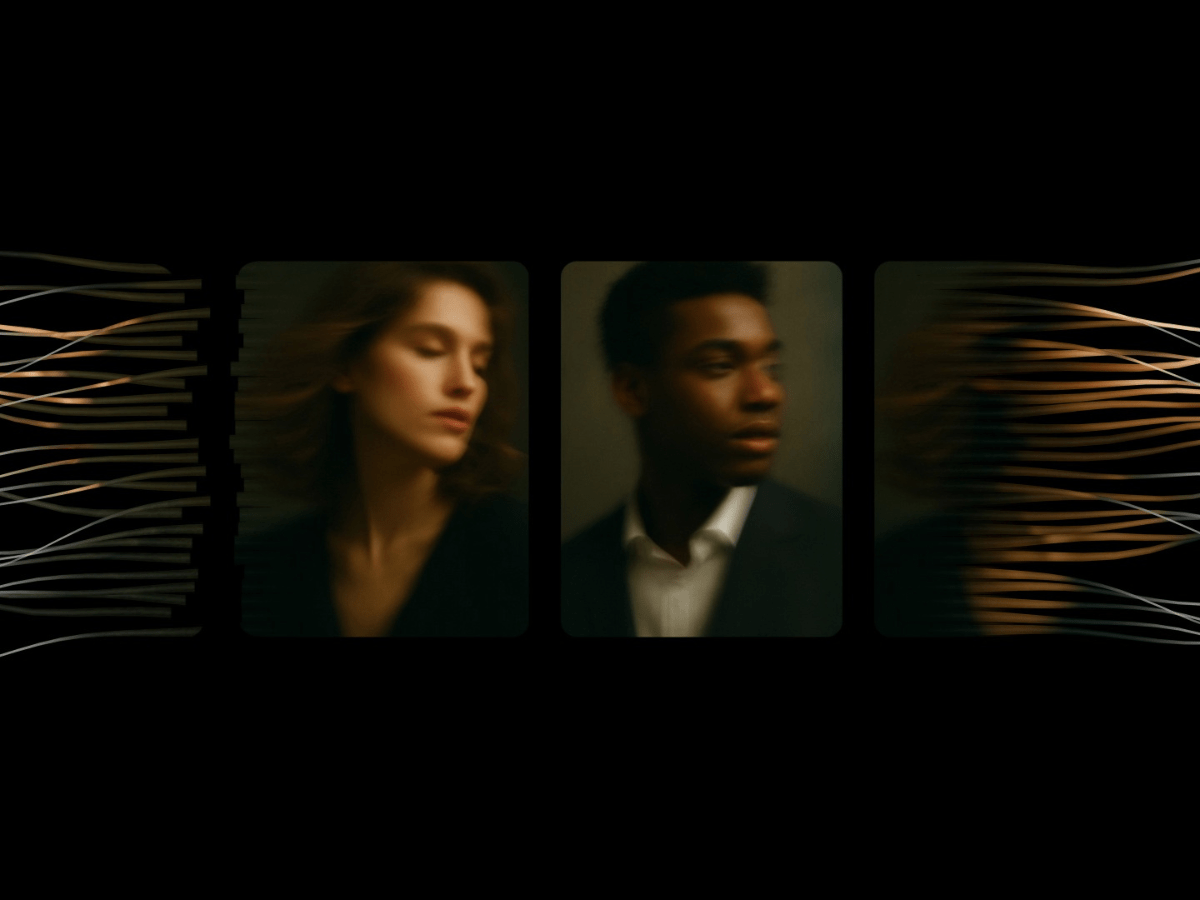
InspoBuilding an Infinite Loom: Unravelling Images into Threads with Three.js
An experimental Three.js demo transforms images into flowing ribbons, weaving them together and unraveling them as they move across the screen, using separate geometry for each thread.
5 Sept4 min read

Codrops
InspoMore Three.js Speakers, More Ideas from Paris
Three.js Conference speakers will present on interactive storytelling, real-time 3D games, and using Three.js scenes and Gaussian splats as training data for generative video models.
3 Sept10 min read

Codrops
InspoBreaking the Frame: Building a Real-Time Datamosh Effect with Three.js
A real-time datamosh effect can be built using Three.js by employing shaders and techniques inspired by video codecs, transforming scene transitions into unpredictable visual distortions.
2 Sept9 min read

Codrops
InspoBlender to Three.js and Back: 10 Tips for a Better Workflow
This article offers ten practical tips for designers to improve their Blender-to-Three.js workflow, focusing on integrating AI, Blender, and Blender MCP for efficiency.
24 Aug4 min read
Inspiration
One Page Love
InspoWebsite Inspiration: Berd
Berd, a desktop app for AI agent development, features a clean monochrome interface combined with quirky 3D characters, overlapping cards, and interactive demonstrations.
23 Aug
Inspiration
Awwwards
InspoKononenko Architectural Bureau
Kononenko Architectural Bureau's website effectively uses minimalism, bold typography, and immersive interactions to showcase its projects and unique design approach.
23 Aug

Codrops
InspoSixty Frames for the Record: A Three.js Game, Seven Fly-Throughs, and a Wall of CRTs
A developer shares lessons learned from building a Three.js lab, detailing how custom shaders, optimized geometry, and careful lighting contribute to cinematic 60fps browser experiences.
22 Aug14 min read

Codrops
InspoRelighting Images with Depth Maps and Three.js
Depth maps, TSL, and WebGPU can be combined to transform flat 2D images into dynamic surfaces with realistic lighting, surface detail, and self-shadowing.
19 Aug3 min read
Inspiration
One Page Love
InspoWebsite Inspiration: Specia1ne
Specia1ne's one page digital design portfolio showcases product interfaces and web systems, utilizing a continuous structural axis to connect sections and interactions with strong typography and motion.
18 Aug

Codrops
InspoBuilding an Animated Testimonial Hero Using the GSAP Timeline and Dynamic CMS Data
This tutorial details building an animated testimonial hero in Webflow, using CMS data, a custom JavaScript counter, and GSAP's visual timeline for a dynamic, hand-crafted feel.
18 Aug12 min read
Inspiration
One Page Love
InspoWebsite Inspiration: Softle
Softle uses physics to manipulate organic shapes, eliminating the need for manual drawing.
16 Aug
Inspiration
Awwwards
InspoSSTR - Friction Reduction
SSTR features a modular grid and motion design tailored to oil drilling hardware and engineers.
16 Aug
Inspiration
One Page Love
InspoWebsite Inspiration: SIMEON SH
Simeon unifies online business revenue views by connecting payment providers, eliminating manual data management and spreadsheets.
15 Aug

Codrops
InspoInside HAOQI.DESIGN: Letting DOM and WebGL Share a Retro-Futurist Stage
HAOQI.DESIGN combines DOM and WebGL in a retro-futurist portfolio using scroll sync and glass shaders.
15 Aug22 min read
Inspiration
One Page Love
InspoWebsite Inspiration: Depo Budget App
Depo is an iOS budgeting app with a one page landing page design that provides a clear daily spending number.
13 Aug
Page 1 of 3 · 70 total
← PreviousNext →