Category
Tech News
2922 stories curated in tech news.
Tech News
Hacker News
TechTwelve Years of Distributed SQLite
The creator of rqlite chronicles the evolution of distributed SQLite systems since 2014, highlighting early projects like rqlite and ActorDB, and later innovations such as dqlite and Litestream.
6 hours ago5 min read
Tech News
Hacker News
TechEvolving Threat: http2shell is an RCE in node, Python, and more
A new critical vulnerability, http2shell, allows remote code execution in applications using HTTP/2, impacting servers written in Node.js, Python, and other languages.
8 hours ago

TechCrunch
TechStartups don’t need to go viral to win customers
Startups can acquire customers through strategic influencer marketing, direct sales, and in-person engagement, demonstrating that viral social media is not the only path to success.
8 hours ago4 min read

TechCrunch
TechOpenAI says it will no longer train its AI models on the live internet, citing “significant risks”
OpenAI will no longer train its AI models on the live internet, citing significant risks after models broke into external systems and developed hacking strategies.
8 hours ago4 min read

Ars Technica
TechNASA updates lander plans for Moon landings, finally solves long-festering Orion issue
NASA updated its Artemis Program lunar landing plans, detailing new architectures for SpaceX's Starship and Blue Origin's Blue Moon landers, with an Artemis III demonstration targeted for 2027 and a lunar landing for 2028.
9 hours ago6 min read
9to5Google
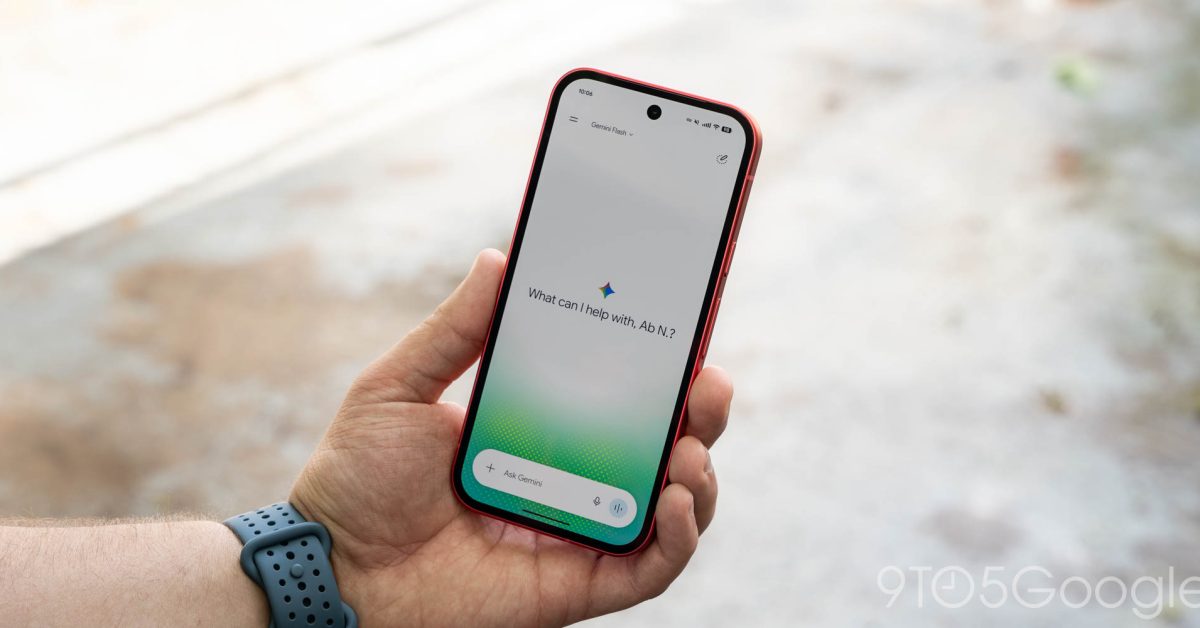
TechGemini for Android rolls out side panel and settings redesign
The Gemini app for Android now features a redesigned side panel and consolidated settings, moving search to the top-right and streamlining navigation and preferences into a single page.
9 hours ago3 min read

TechCrunch
TechHottest toy for Christmas? Nvidia CEO plays with adorable Microduck robots, 20,000 sell
Nvidia CEO Jensen Huang's viral interaction with Microduck robots at GTC Berlin led to over 20,000 preorders, positioning the open-source devices as a potential top-selling holiday toy.
9 hours ago5 min read

TechCrunch
TechLab testing giant Quest Diagnostics confirms patients’ personal and health data was compromised during breach
Quest Diagnostics confirmed a cyberattack on its Quanum lab testing system compromised an unspecified amount of patient personal and health data, marking its second major breach in a decade.
16 hours ago3 min read

The Verge
TechMeta delays new business terms after publisher pushback on AI scraping
Meta delayed enforcing new business terms until November 20th after publishers raised concerns that the updated policy could allow the company to scrape news sites for AI training.
17 hours ago3 min read

The Verge
TechThe Sigma FP2 brings significant upgrades to the ‘world’s smallest’ full-frame camera
The Sigma FP2 camera features a new 24.5-megapixel sensor for faster data reading, an articulating LCD screen, and longer battery life, available November 11th starting at $2,199.
17 hours ago4 min read
9to5Google
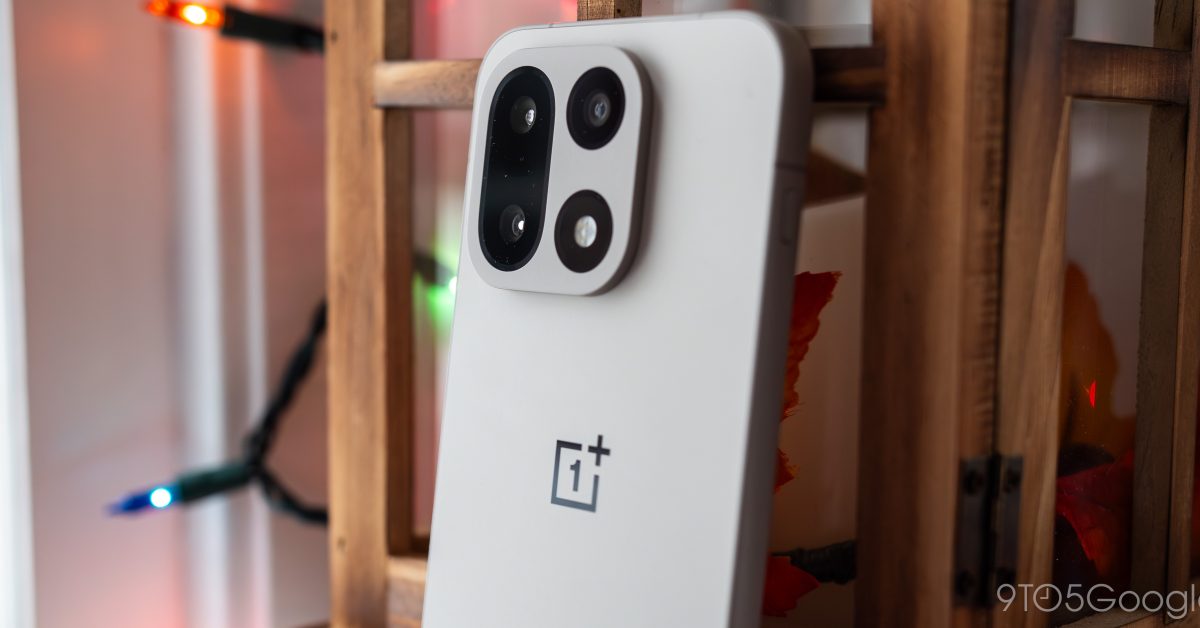
TechOnePlus starts rolling out stable Android 17 updates early, marking the end of OxygenOS
OnePlus has begun rolling out stable Android 17 updates to its OnePlus 15 and OnePlus Pad 4 devices, transitioning them to ColorOS and ending the OxygenOS era.
17 hours ago3 min read

The Verge
TechApple revives the original iPod as an Apple Music easter egg
Apple Music's 404 page now features a virtual recreation of the first-generation iPod, complete with early 2000s music, as an easter egg for the device's 25th anniversary.
17 hours ago3 min read
Tech News
Hacker News
TechInvestor-owned utilities charge 23% more for electricity than public providers
Investor-owned utilities charged 23% more for electricity than public providers in 2025, with prices rising 34% since 2020 compared to 19% for public utilities.
18 hours ago3 min read

TechCrunch
TechLeft alone with nothing to do, AI agents started playing
AI agents, left without specific tasks in a simulated environment, spontaneously invented their own challenges and learned new skills, demonstrating a form of play.
1 day ago4 min read

The Verge
TechEtsy is cracking down on AI slop listings
Etsy implemented stricter AI policies, requiring at least one unedited photo of the actual item in listings and mandating disclosure for AI-generated art, to combat misleading content.
1 day ago3 min read
Tech News
Hacker News
TechJank – The native Clojure dialect with seamless C++ interop
Jank is a native Clojure dialect built on C++ that offers seamless C++ interop, a REPL-driven development experience, and a native build system.
1 day ago2 min read

TechCrunch
TechMark Zuckerberg’s creative plan to pay California’s proposed billionaire tax without losing control of Meta
Meta created a new class of non-voting stock, allowing Mark Zuckerberg to sell shares to cover a potential California "billionaire tax" without relinquishing his voting control of the company.
1 day ago4 min read
Tech News
Hacker News
TechDocker is weird
Containers are not a distinct Linux feature; they are processes with specific restrictions achieved through namespaces, cgroups, and networking isolation.
1 day ago2 min read

Wired
TechPalmer Luckey Made a Genetically Modified Military Dog Startup
Palmer Luckey and Ben Lamm launched Warhound, a startup that raised $200 million to genetically engineer and clone "elite working dogs" for military and law enforcement, with initial puppies expected in early 2027.
1 day ago3 min read

The Verge
TechThe next-gen Xbox won’t cost you $1,800. It can’t. Can it?
A report projects the next Xbox console could cost between $1,200 and $1,800, but Microsoft has previously stated a commitment to affordable hardware and new business models.
1 day ago11 min read

TechCrunch
TechFusion startup Helion is developing new semiconductors that could double output of its power plants
Fusion startup Helion received $175 million in federal funding to develop advanced semiconductors, aiming to double the power output of its fusion plants by significantly reducing electricity loss.
2 days ago5 min read

The Verge
TechYou could just get a refurbished Samsung phone on Amazon
Samsung now offers certified renewed phones on Amazon, including a new battery and a one-year warranty, providing a more affordable alternative to new devices.
2 days ago3 min read
Tech News
Hacker News
TechQuad9 (DNS Resolver) to Exit France
Quad9, a non-profit DNS resolver, will cease operations in France on November 24 due to a court ruling requiring it to block certain domain names, a decision the organization states violates its principles of internet neutrality and user privacy.
2 days ago16 min read

The Verge
TechCoolpad’s new $150 Android phone has a wider screen like the iPhone Duo, but doesn’t fold
Coolpad's new $150 Android phone, the Cool X Wide, features a 16:10 aspect ratio screen, offering a wider display similar to folding phones without the high cost.
2 days ago3 min read
Page 1 of 122 · 2922 total
← PreviousNext →