Category
UX & Thinking
140 stories curated in ux & thinking.
UX Collective
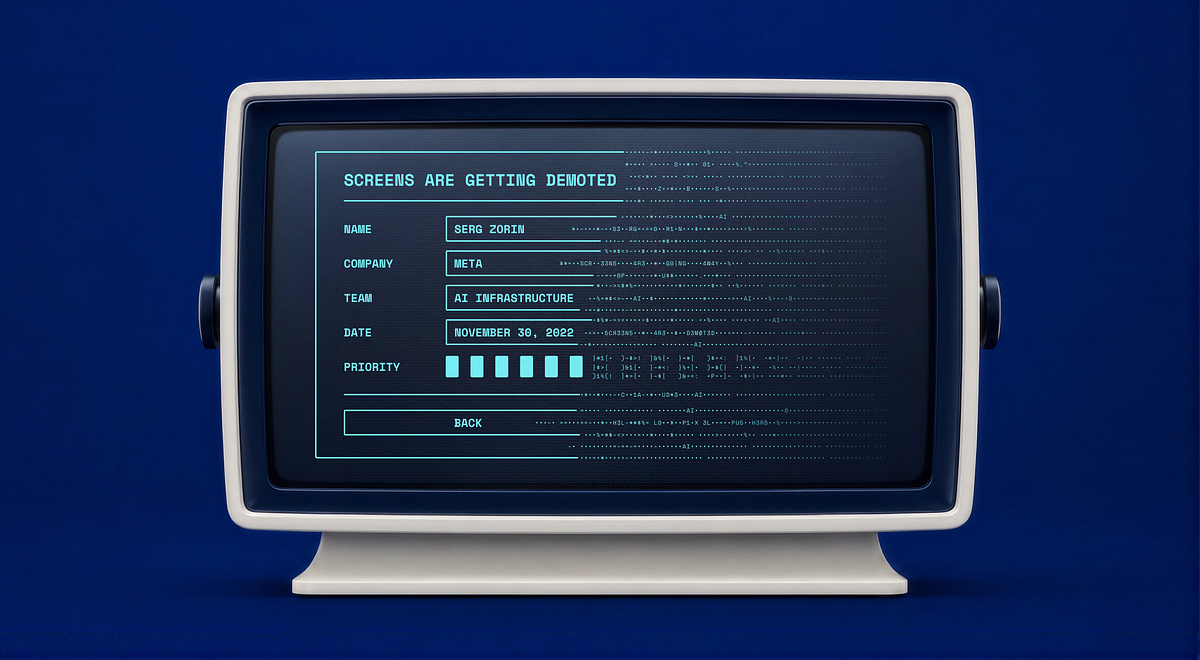
ThinkingThe screens are getting demoted
As AI advances, user experience design shifts from creating screens to questioning their necessity, with AI performing tasks previously requiring multiple user interface steps.
22 Jul12 min read
UX Collective
ThinkingI handed a UX review over to AI. Here’s what happened.
AI assists UX reviews but does not replace human expertise, requiring user input for accuracy.
21 Jul6 min read

UX Collective
ThinkingAI can fake your portfolio. It can’t fake the second question.
AI can fake a portfolio, but it cannot replicate the live, unprepared moments in an interview.
21 Jul13 min read
UX Collective
ThinkingThe feature trap
Product teams often confuse building with validating, responding to cues rather than actual problems.
21 Jul7 min read

UX Collective
ThinkingResearch shouldn’t end in a deck
Research should not end with a presentation deck, but rather become a living artifact.
20 Jul7 min read
UX Collective
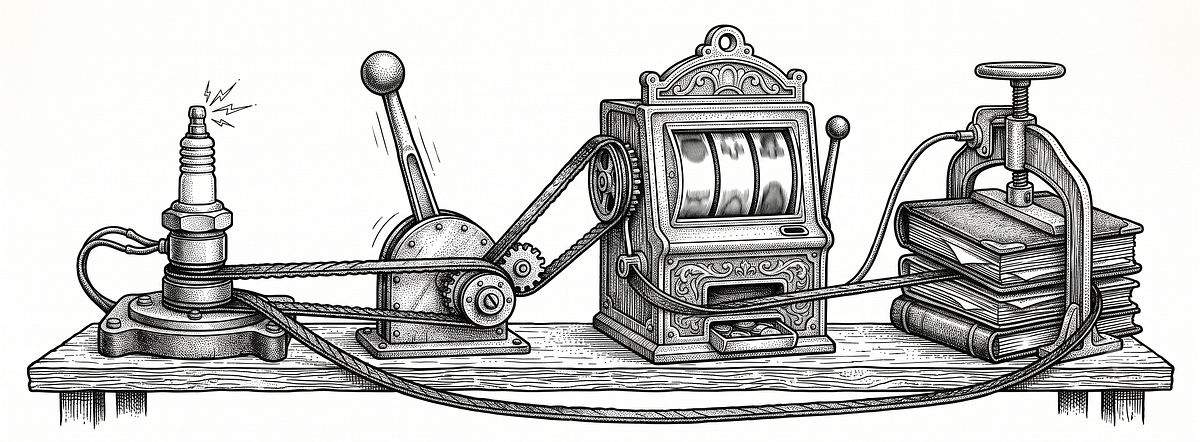
ThinkingHow to apply Nir Eyal’s Hook Model to AI products, safely
Nir Eyal's Hook Model applies to AI products through a four-step loop of trigger, action, variable reward, and investment.
20 Jul18 min read
UX Planet
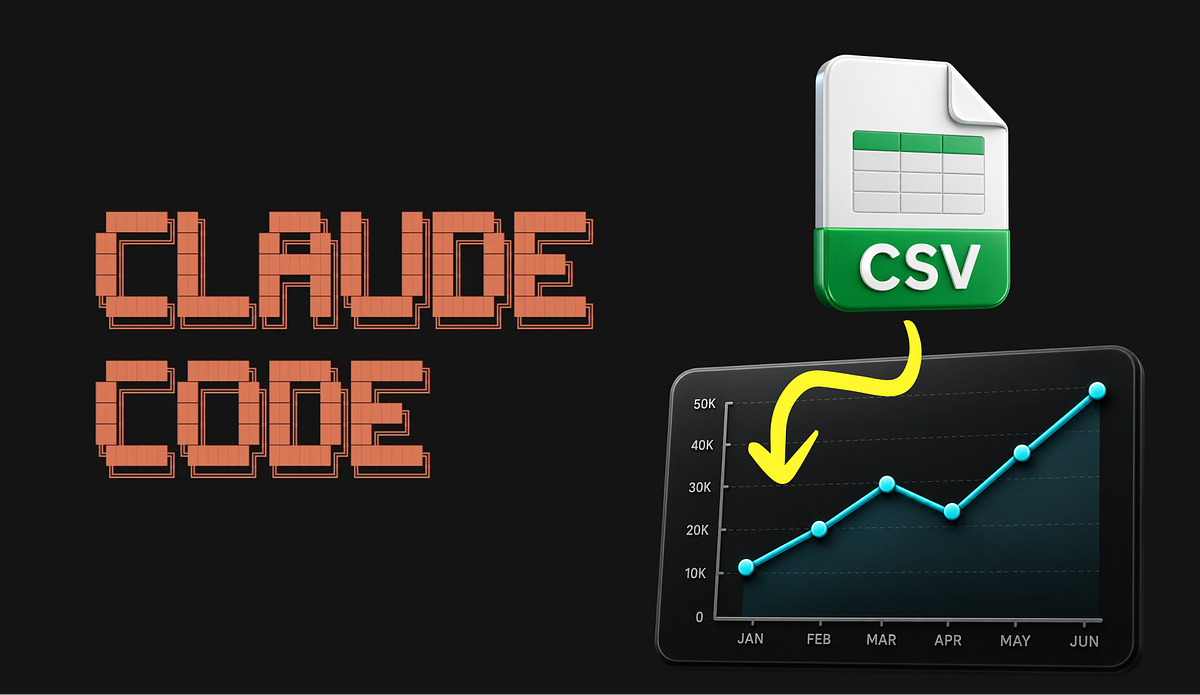
ThinkingHow to Turn a CSV into Interactive Charts with Claude Code
Claude Code helps turn static CSV files into interactive data visualizations.
20 Jul7 min read

UX Collective
ThinkingThe weakest channel
The enduring design of the 1970 FIFA World Cup soccer ball, a black and white pentagon-hexagon sphere, demonstrates that universality in design emerges from surviving constraints, not inherent beauty or popularity.
19 Jul7 min read
UX Collective
ThinkingThe “mocked, then loved” AirPods effect
AirPods and Apple Watch overcame initial mockery to become highly popular products through iteration and user experience.
17 Jul6 min read
UX Collective
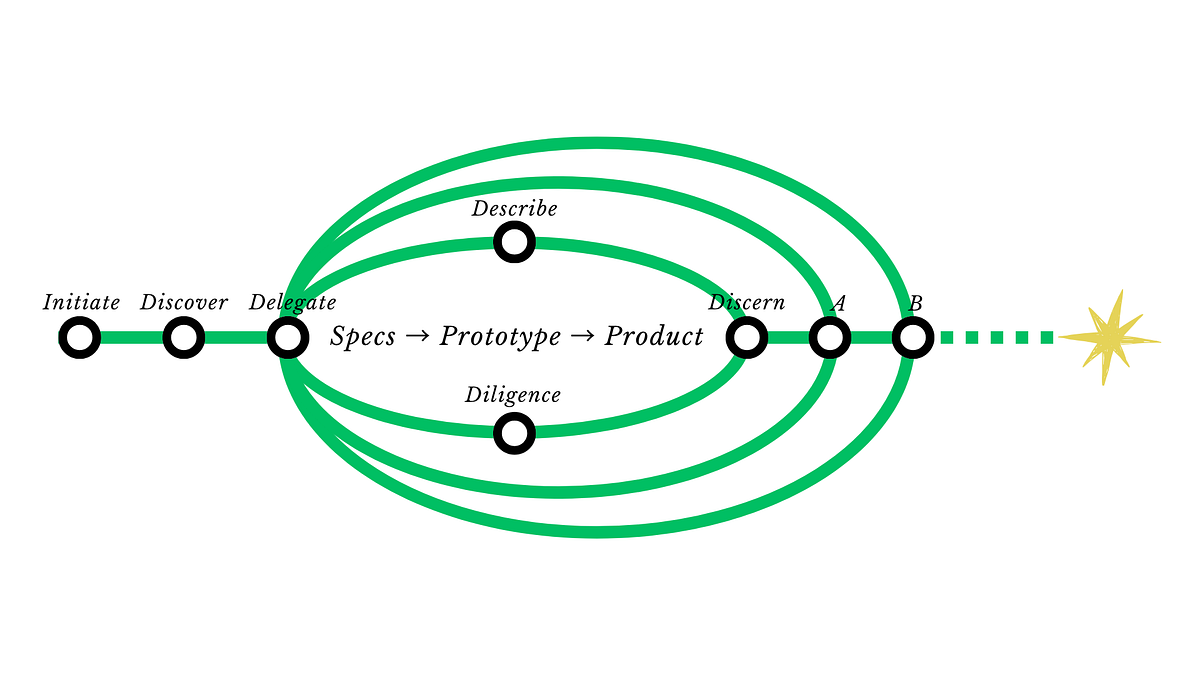
ThinkingFrom vibe to specs: reclaiming the design process with SAID framework
AI-native teams replace static handoffs with continuous, spec-driven product engines using the SAID framework and Git as a shared workspace.
16 Jul9 min read
UX Collective
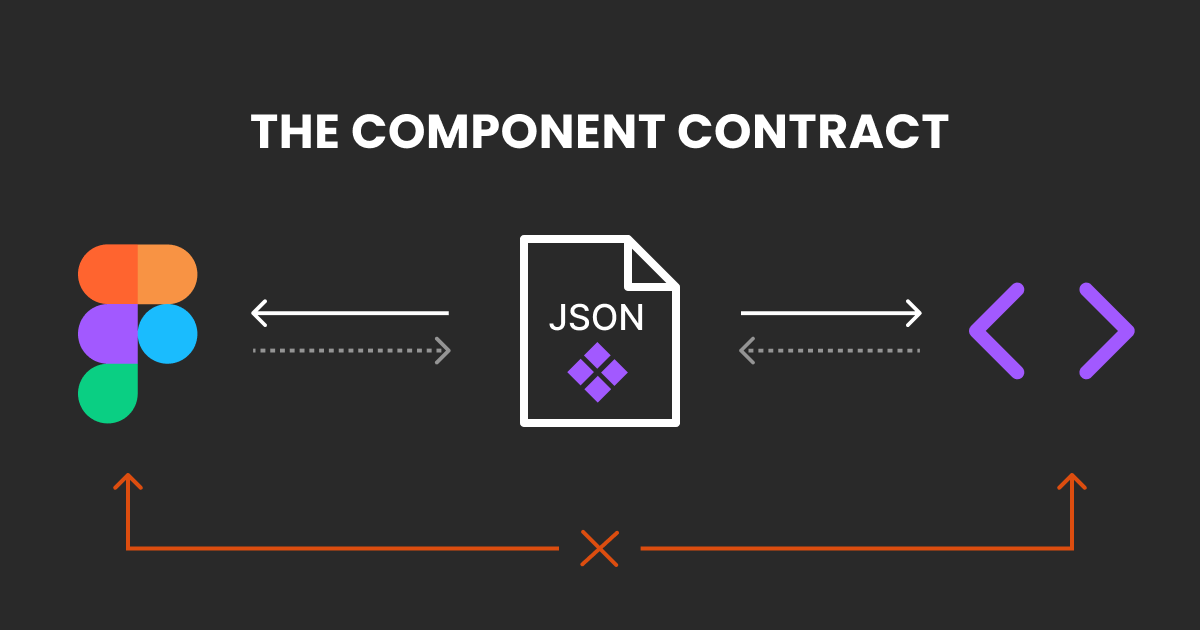
ThinkingDesign system contracts: the component lives in neither Figma nor code
Design system contracts use a central file to define components, generating Figma and code versions automatically.
16 Jul12 min read
UX Planet
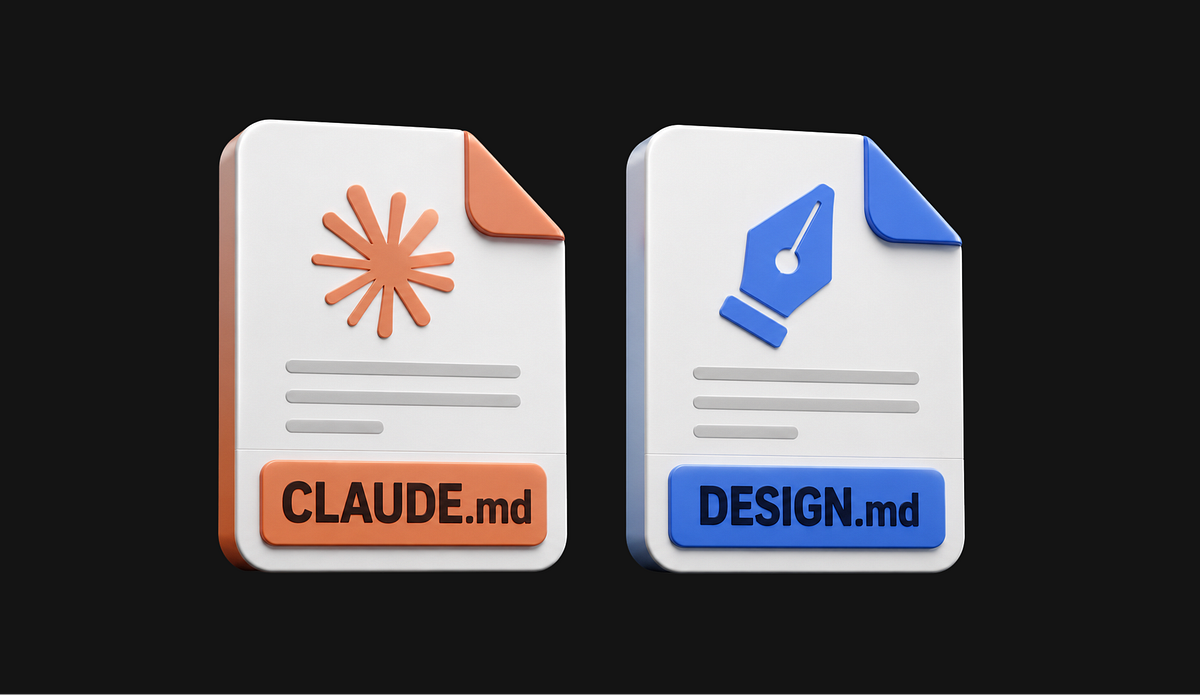
ThinkingCLAUDE.md vs DESIGN.md: What to Put in Each for Claude Code
CLAUDE.md and DESIGN.md serve different purposes in Claude Code projects, with CLAUDE.md providing operational instructions.
15 Jul7 min read
UX Collective
ThinkingTaste cannot be delegated
AI's ability to democratize execution highlights that strategic thinking and individual design judgment, not just preference prediction, are crucial for creating meaningful and impactful designs.
12 Jul9 min read
UX Collective
ThinkingCraft still matters, but it’s about outcomes
Design craft is shifting from artifact production to discerning the right problems and owning outcomes, as AI commoditizes the creation of polished design elements.
11 Jul18 min read
UX Planet
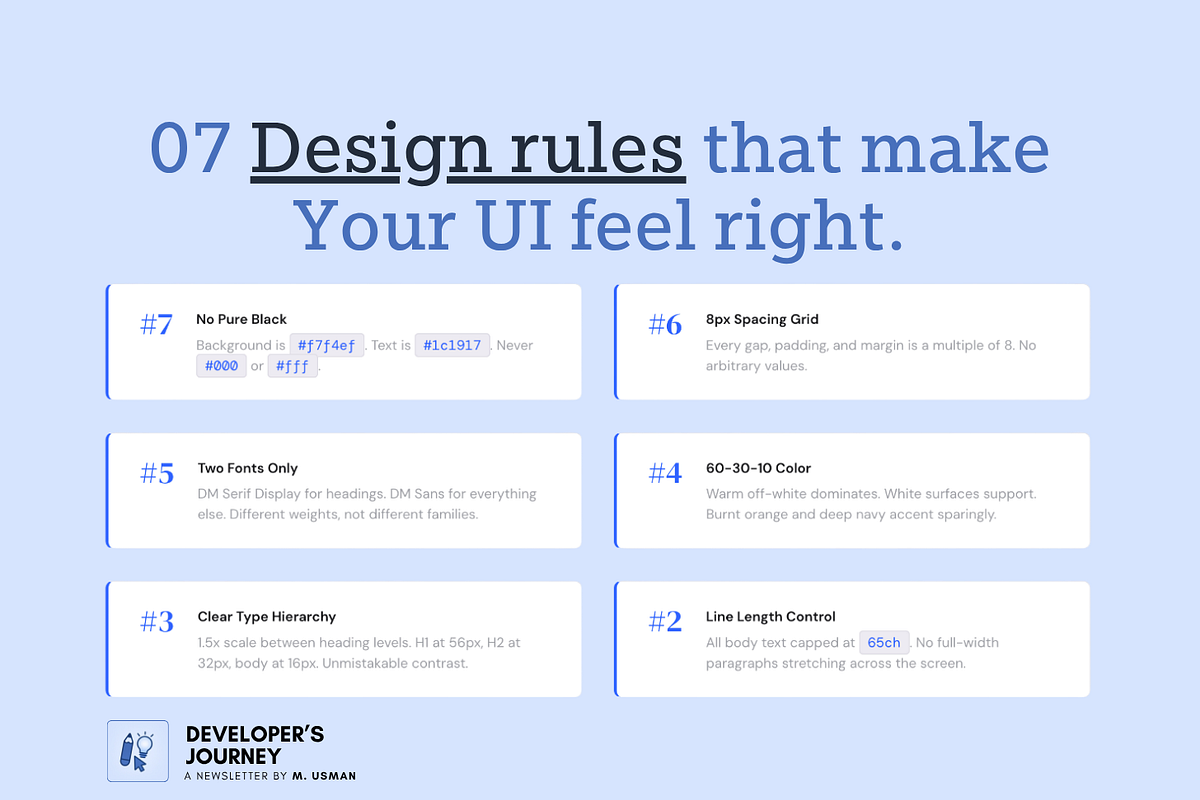
Thinking7 Design Rules That Take 10 Minutes to Learn and Fix Your UI Forever
Using pure black in UI design is generally avoided in favor of other colors that achieve similar contrast and readability.
10 Jul3 min read
UX Planet
ThinkingClaude Code Workflow Tips After a Year of Daily Use
A senior product designer shares a 7-step workflow for using Claude Code efficiently after a year of daily use.
9 Jul4 min read

UX Collective
ThinkingThe revolution was the easy part
The article argues that revolutions, like the American one or the current AI boom, are merely announcements, with the real work of evolution and building occurring in the slow, unglamorous aftermath.
8 Jul15 min read

UX Collective
ThinkingLosing the spark in their eyes
Daily use of AI tools can lead to deprioritization of creating meaning in work, causing a loss of personal connection and spark.
8 Jul6 min read

UX Collective
ThinkingThe crisis of the what
AI is taking over decision-making, blurring the line between tactical execution and strategic judgment.
7 Jul13 min read

UX Collective
ThinkingWhat the Lean Startup still teaches us about generative AI
Most generative AI programs repeat mistakes the Lean Startup was written to prevent, such as poor product-market fit and lack of iterative building.
6 Jul10 min read

UX Collective
ThinkingShould you really aim to be the best?
Research suggests that knowing one is not the best can either sharpen or demotivate, depending on individual perspectives and comparisons.
6 Jul13 min read
UX Collective
ThinkingThe promotion that didn’t take
Seniority in design careers is measured by two independent factors, title and maturity level, which often do not align.
6 Jul13 min read

UX Collective
ThinkingThe face was never the point
Gunnar Johansson's 1973 experiment showed that humans perceive animacy through movement, not facial features.
4 Jul4 min read
UX Planet
ThinkingI’ve Watched 10 UI Trends Rise and Die. Most Designers Still Can’t Name Half of Them.
Designers can spot common UI styles instantly but often cannot label them under pressure.
2 Jul4 min read
Page 3 of 6 · 140 total